Tuesday, February 11, 2014

Call for Abstracts: Government Development Strategies in the Pastoral Areas of the Horn of Africa (HoA): Lessons Learned

The Institute for Peace and Security Studies, IPSS, of Addis Ababa University is a premier institute for Peace and Security Studies in Africa. Its mission is to promote peace and security in Ethiopia and Africa at large through education, research and professional development. The Institute produces skilled professionals in conflict prevention, management and resolution as well as in peace building, and promotes the values of a democratic and peaceful society. Read more www.ipss-addis.com
he Institute for Peace and Security Studies, IPSS, is calling for Abstracts on Government Development Strategies in the Pastoral areas of the Horn of Africa: lessons learned.
The research findings will largely focus on analyzing government policy and implementation of strategies with solid evidence in pastoralist areas of Africa. The specific objectives of the research include:  investigating government development strategies and implementations in pastoral areas, analysing pastoralist response to these development strategies and documenting policy and strategic implications in the framework of food security and sustainable resource management.
The deadline for the submission of abstracts is 28 February 2014.
The research findings are expected to be presented and debated at an international conference to take place in October 2014.
Details on can be found under the attachment below or follow this link http://ipss-addis.org/index.php?option=com_content&view=article...

Call for Papers for Special Issue International Journal of Conflict Engagement and Resolution

The International Journal of Conflict Engagement and Resolution hereby calls for papers for a special issue with the theme “Bridging Theory and Practice of Creative Conflict Engagement”. The effort to bridge theory and practice within the field of conflict engagement is an ongoing endeavor that goes back to the founding moments of the field. Some practitioners, who have a prominent role in the professional development of the field, perceive theory as remote and unrelated to their everyday craft, and some academics perceive the practice of conflict engagement as unsystematic and too intuitive to capture theoretically. We believe that theory and systematic research can and should be a useful tool for conflict interventions, and experience in the field is and must be an essential component for building relevant theory. However, since the two worlds of theory and practice operate on two sets of different, and sometimes even contending emphases, this effort is more aspirational than actual. As Einstein aptly said, “In theory, there is no difference between theory and practice, but in practice there is.”

International Conference
Those authors whose papers have been accepted for publication will have the possibility to submit a proposal for a presentation (as a panel, poster session or workshop) at an international conference organized by The Program on Conflict Management, Resolution and Negotiation, Bar Ilan University Israel from 21-23 December 2014. The conference is based on a commitment to surface the challenges, seize the opportunities and in these ways contribute – both theoretically and practically –  to building the field of conflict engagement by bridging the gap between theory and practice. Bridging theory and practice means encouraging close dialogue between the field and academia. It also calls for effective adaptation of conflict resolution theory and studied application within professional practice.

We are currently applying for funds to support stipends for travel and local expenses at our conference and thus hope to provide support for conference presenters/authors  who wish to participate.

Submission Guidelines and Deadlines
Paper proposals which outline intended contribution (2-3 pages), are due March 1, 2014

These proposals should
  1. outline a main argument or hypothesis about the dilemmas and/or opportunities for merging theory and practice in conflict resolution,
  2. describe the research methods used (field based, action research oriented, empirical, review of previous studies, etc.),
  3. offer some practical recommendations for advancing theory and practice merger for the field.

Accepted paper proposals should be submitted for review and possible publication on July 1, 2014 (for publication by November 2014).

Proposals/inquiries should be sent to Nofit Amir, Managing Editor, at Intj.Cr@mail.biu.ac.il.More information can be found here

Night Travel: Women's Nightmare!

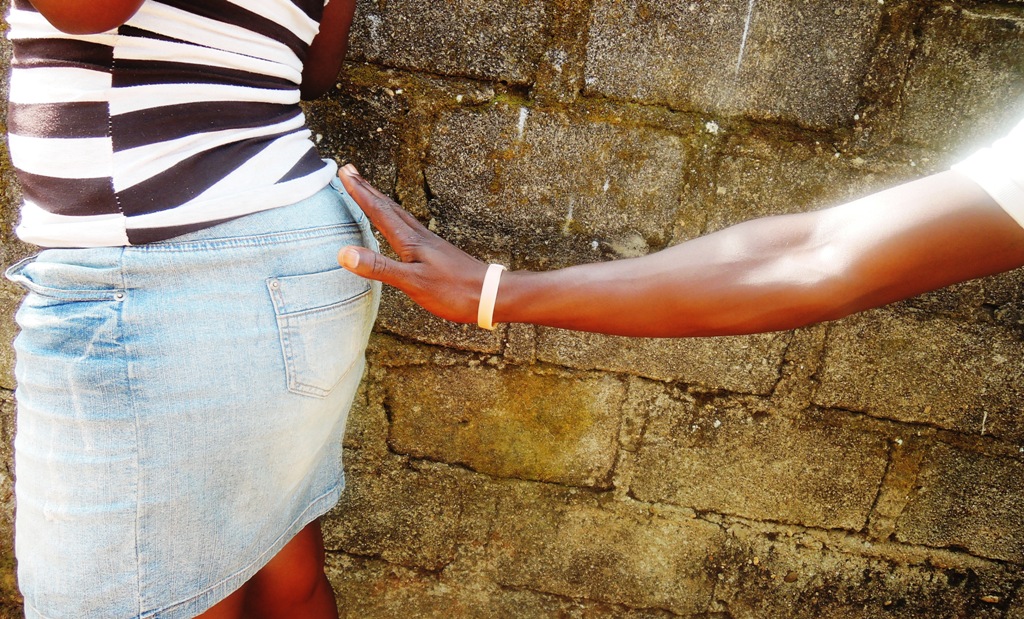
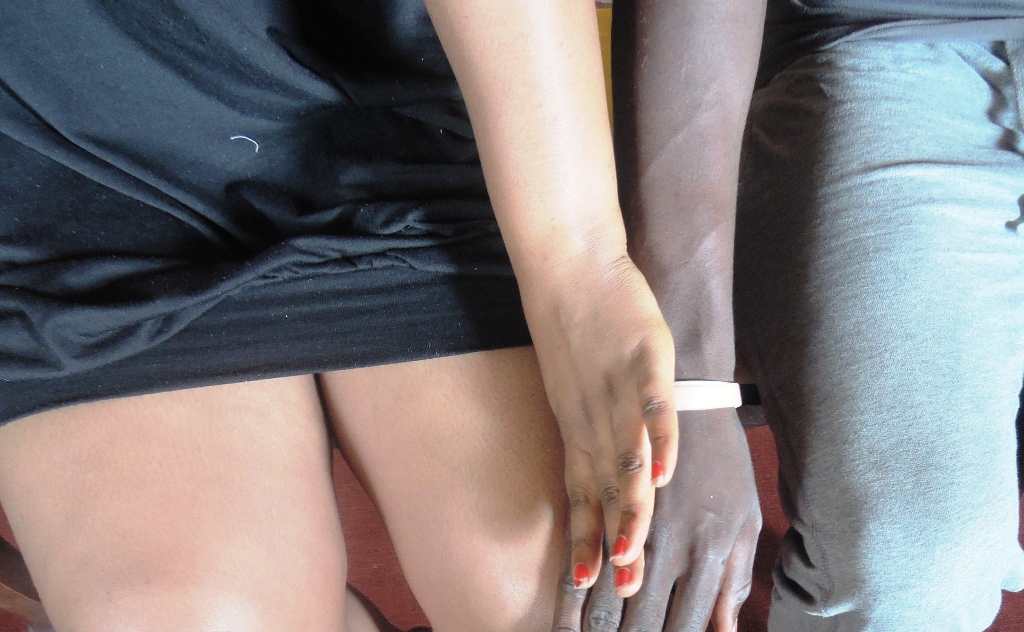
Sexual harassment of women in public spaces persists in Cameroon.
Photo credit: Comfort Mussa

Some months ago I had to travel from Bamenda to Douala for work.
I had a lot of work to do on the set date and took the night bus to save time…and also get some sleep! That was not to be.
I arrived at the agency, found my seat inside the bus close to the window. I wanted a comfortable spot where I planned to sleep throughout the trip. A man probably in his forties got into the bus, checked his ticket number and eventually took the seat next to mine.
As usual, when our journey started, the driver switched off the lights in the bus and began playing some really loud music. I leaned back and tried to get some sleep in spite of the music. The man beside me adjusted himself on his seat, put his arm on the back of my seat and gingerly touched my neck. I politely asked him to take his hand away. He did and I shifted away from him and moved closer to the window and eventually dozed off.
About an hour later, I woke up and realized my strange neighbor was struggling to force his hands into my shirt to touch my boobs!
I felt sick. Horrified, I yelled and asked him to stop. Surprisingly enough, no passenger asked why I ordered my neighbor to stop touching me. I could not change my seat because all seats on the bus were already occupied I didn’t sleep again throughout the trip. I was awake so I could”guard my body” against uninviting intrusion. I needed to make sure that the man, who by necessity had to sit beside me for more than five hours, didn’t try his nasty moves again.
I have experienced such harassment thrice and heard countless stories of women who are harassed in buses, taxis and even motor bikes in Cameroon. It is a constant battle for some women to reach their destinations without being touched, squeezed, and grabbed. Sometimes, they are subjected to lewd comments from other passengers.
In many cities in Africa, women face harassment and violence not only at home and in their relationships, but also in public spaces. The Cameroon government has since joined forces with international organizations in trying to end all forms of violence against women. Despite this, harassment and violence against women is a daily occurrence across the country.
Hiding the problem
Public transportation across Cameroon has multiple problems and overcrowding is just one of the most annoying of them. It would be unfair to blame all men for touching women or vice versa. However we (women) have a strong case to make concerning sexual harassment on public transportation.
Sadly, most cases are under reported. How many women would report an incident of sexual harassment inside a bus to the police? Very few ever do that. The majority of women would suffer in silence. Others may feel embarrassed and will not want to ‘make a scene’. Some others keep quiet for fear of being accused of provoking the situation.
I hear questions like, “how is a man supposed to control his urge when he stands behind a girl wearing a tight pair of jeans in a congested bus or seating besides a girl with exposed enticing body parts?” I wonder if those who ask such questions will also tell a hungry boy who passes near a restaurant to break in and steal some food.
Photo credit: Comfort Mussa
“Our bodies are never public property under any circumstance,” Gloria Steinem
Photo credit :Comfort Mussa
Problems persist when not tackled
I told the driver about my experience when the bus stopped and he just shrugged and said that is how some men behave. I complained at the bus agency and was told the same thing. Some men just like touching women in night buses, was the general reaction and little could be done to stop the harassment.
One of the key reasons for the persistent high rate of violence against women in Cameroon is that they are mostly ignored by the rest of society. I remember a situation on a bus once when a lady complained loudly that the man sitting beside her was trying to touch her thighs. Other passengers laughed and told her to “arrange” whatever it was with her neighbor. Some other people told her that “neighbor helep neighbor” (that is, she should help a neighbor in need)  .The driver did not stop or warn the man since he did not think it was any form of harassment. Men apparently always get away with a lot of bad behavior especially when this is directed against women
The Way Forward
If we are to end sexual harassment in public spaces and our public transportation network, we’ll have to start raising our voices in protest. Victims must speak out each time anybody harasses them wherever that happens. No excuse is good enough. When we stay silent we are condoning such types of behavior.
Safety measures
Here are some safety tips I gathered along the way;
• If I must travel on the night bus, I try to get a seat close to the driver because there is usually some light there unlike the rest of the bus that is often pitch dark
• If I am traveling with a friend, I prefer to seat near them.
• Reading a book (when traveling by day) or wearing headphones tells anybody near me that I don’t want to engage. This sometimes is still not good enough o stop the bullies.
• Reporting the perpetrator is another good measure. Most of the time, no action is taken against the bully but this is a step in the right direction. • I still think the fact that there are no lights inside night buses is primarily to blame for this harassment.
• There have been complaints about this and some travel agencies are introducing some changes. In December 2013, I was very happy to see that one of the travel agencies did provide some form of shady light at night. With some kind of light, most of the perpetrators some of whom are just cowards, will do nothing. They fear any form of light and exposure.
• Speaking out against harassment on public transportation vehicles is a way to ensure that the society learns that harassment is NEVER acceptable. I have even encouraged some male colleagues to discuss the subject of sexual harassment against women on their radio programs. The more we talk about and against it, the more aware our society becomes of the fact that sexual harassment against women is wrong.

Tuesday, January 28, 2014

Fourth Summer School on Governance of Extractive Industries to add comments!

The 4th edition of the Summer School on Governance of Extractive Industries will be held at the Ekounou Ayene campus of the Catholic University of Central Africa (UCAC) from 18th to 30th August 2014.
It is organised by UCAC's Centre of Excellence for Extractive Industries Governance in Francophone Africa (CEGIEAF) with the support of the Revenue Watch Institute (RWI) and the French Ministry of Foreign Affairs.
Civil society, journalists and parliamentarians interested in participating should submit an application to cegieaf@yahoo.fr by February 15, 2014 comprised of: a one-page cover letter, completed questionnaire of needs, and a recommendation letter by February 15, 2014. Full and partial scholarships available.
Download the call for applications (http://www.cop-mfdr-africa.org/events/call-for-applications-4th-summer-school-on-governance-of-extracti?xg_source=activity) and the questionnaire of needs for full details.
--
Submitted by AfCoP Member Erika Tchatchouang, Cameroon

Time: August 18, 2014 at 7pm to August 30, 2014 at 7pm
Location: Cameroun
City/Town: Yaounde
Event Type: training
Organized By: Centre of Excellence for Extractive Industries Governance in Francophone Africa (CEGIEAF)
Latest Activity: 2 minutes ago
Export to Outlook or iCal (.ics)


RSVP for [Training]: Fourth Summer School on Governance of Extractive Industries to add comments!

Join CoP-MfDR-Africa


Thursday, January 23, 2014

Intense Art Magazine - I Am Africa

L'année nouvelle a commencé, vibrante et  porteuse de nouveaux projets et de nouveaux challenges. Connaissant tes affinités et ta sensibilité pour l' art, je me permets de te soumettre ici la création du tout premier magazine d'art africain contemporain dédié aux femmes sur lequel je travaille avec une équipe - basée entre Amsterdam, Paris et Londres. Je voudrais revenir sur ce projet donc je t'ai brièvement parlée lors de notre rencontre l'été dernier.

IAM - The Intense Art Magazine, est une publication semestrielle qui met en lumière la création artistique Africaine contemporaine à travers le prisme de la féminité : femme artiste ou créatrice mais également femme sujet de la création artistique. 
 

La première édition de IAM, disponible en mai 2014, sera dédiée au Cameroun, suivie du Nigeria (automne 2014), du Sénégal, et de l'Afrique du Sud (2015). L'idée étant de couvrir au final les 54 pays africains. Chaque édition sera pour nous l'occasion de faire rayonner la création artistique locale en privilégiant un contenu éditorial et une expérience visuelle de très haute qualité. Nous nous sommes en ce sens rapprochées de professionnelles du monde de l'art, de la publication et du design graphique. 
IAM aura aussi pour vocation de mettre en lumière des femmes africaines influentes et dont le parcours peut représenter une source d'inspiration et servir de modèle d'identification.   
 
Par ailleurs, la création d'une version numérique du magazine disponible sur internet nous permettra de doter IAM d'une plateforme d'échange, d'éducation, de communication et de collaboration. Une dimension indispensable pour les jeunes générations. 
J'ai le plaisir de t'envoyer ci-joint une ébauche du magazine papier et t' invite à découvrir notre site (en construction) sur: www.iam-africa.com
La ligne éditoriale de la première édition est en voie de création. L'architecte et designer camerounaise Danielle Diwouta-Kotto a en effet accepté de mener à bien cette première 'mission'. Ensemble, nous identifions durant les 4 semaines a venir, les artistes, stylistes, architectes et designers camerounais qui participeront à la première édition. Une sélection devra être ensuite effectuée et confirmée par un editorial board, qui compte, entre autres, Christine Eyené et Bisi Silva.
 
Je te remercie infiniment chère lectrice/lecteur et reste à ton entière disposition pour toute question, en espérant que nous travaillerons ensemble autour de ce très beau projet qui met les femmes et l'Afrique en lumière.
 

Wednesday, January 22, 2014

'LADIES'AFTERWORK 3 on the way

 Women continue to make the difference in our continent with brilliant initiatives meant to step up performances, enable ladies to rob minds intellectually and grow in diverse domains of competence.  After the first 2 editions in 2013, 'LADIES'AFTERWORK
champions in new ideas for women working every second to uplift working conditions in our different places of work, shuns the out numerous forms or violence and injustice, but most of all, encourages the dream game.
 
 We attend parties and occasions all the time and we wonder how the party ground was decorated.  The occasion opens with a speech from the Lady of the day, Me Alice KOM, followed by speed business dates between participants, a MIADI workshop, Human Resource exchange with Nathalie TAGNI who will brief the ladies on tips to keep during interview sessions. Liliane NJAPOUM, the CEO of SMS deco will highlight some decoration tips in  another practical workshop followed by an Irish Cream tasting exercise and a beauty relaxation spa treat.
 
Interested ladies are invited to pick up invitations currently sold at 10 000 Francs CFA each at any one of these sales points:
- CANDY Lingerie located at  Bonapriso, Monoprix street, Tel: 33 42 05 10
- EXCEL SPA at Bonapriso, Champion Street
- Or call 70475710/ 99628167/ 33420410 for immediate delivery.
The 3rd edition of 'LADIES'AFTERWORK takes place at  RESTAURANT LA MARMITE, situated at  Bonapriso on the 31st JAN 2014 as from 5pm.


Friday, January 17, 2014

The International Year 2014 Advocacy Dates

2014 is the...

International Year of Family Farming (official launch)
International Year of Crystallography
International Year of Small Island Developing States (1-4.09.2014 conference)

The International Decade


This is the...

United Nations Decade of Sustainable Energy for All (2014-2024)
Decade of Action for Road Safety (2011-2020)
United Nations Decade on Biodiversity (2011-2020)
United Nations Decade for Deserts and the Fight against Desertification (2010-2020)
Second United Nations Decade for the Eradication of Poverty (2008-2017)
Decade of Recovery and Sustainable Development of the Affected Regions - relating to the Chernobyl disaster (2006-2016)
International Decade for Action: Water for Life (2005-2015)
United Nations Decade of Education for Sustainable Development (2005-2014)
Second International Decade of the World’s Indigenous People (2005-2014)


2013 was the...

International Year of Water Cooperation (media)
International Year of Quinoa

2012 was the...

International Year of Cooperatives
International Year of Sustainable Energy for All (official website)
European Year for Active Ageing and Solidarity between Generations (press and media)
and the end of the...
United Nations Literacy Decade “Literacy as Freedom” (2003 - 2012) - Coordination Unit: Tel:  +33 1 45 68 08 39  literacy@unesco.org

2011 was the...

International Year of Youth (12 August 2010 - 11 August 2011)
International Year of Forests, in recognition of the significant contribution that forests and their sustainable management can make to sustainable development, poverty eradication and the achievement of internationally agreed development goals
International Year for People of African Descent
International Year of Chemistry
European Year of Volunteering
and the beginning of the...
Decade of Action for Road Safety (2011-2020)
United Nations Decade on Biodiversity (2011-2020)

2010 was the...

International Year of Biodiversity, to bring greater international attention to the continued loss of biodiversity.
International Year for the Rapprochement of Cultures
European Year for Combating Poverty and Social Exclusion (press release); a campaign aims to reaffirm the EU’s commitment to making a decisive impact on the eradication of poverty by 2010
International Year of Youth (12 August 2010 - 11 August 2011)
and the end of the...
Decade to Roll Back Malaria in Developing Countries, Particularly in Africa (2001-2010)
International Decade for a Culture of Peace and Non-violence for the Children of the World (2001-2010)

* More Details  http://www.worldandmedia.com/dates/This-is-the-international-year-of.html